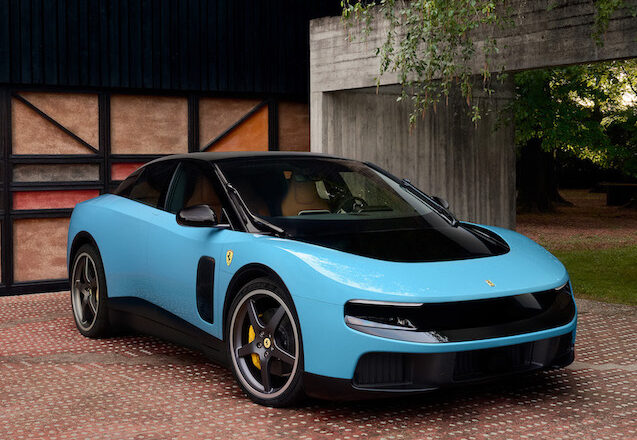
Rome was not built in a day and so wasn’t Ferrari. It was in Rome, on the 25th day of May in 1947 that Ferrari won its first victory—the Ferrari 125 S had won the Gran Premio di Roma at the Baths of Caraculla circuit. Seventy-nine years later, Ferrari has returned to this gateway of history to mark the entrance of a new era that yet again redefines the limits of engineering excellence and innovation with the Ferrari Luce – the first fully electric Ferrari.
High‑capacity 122 kWh battery • EV range of over 530 km
• 0–100 kmph in 2.5 seconds • top speed of over 310 km/h
Ferrari Luce: A new era or just another platform?
LET THERE BE LUCE.
Ferrari Luce is not the harbinger of a new age, marking the transformation into electric drivetrain technologies and shutting down what has inspired Ferrari love for so long. While the Luce is driven by four electric engines, electric will co-exist with other platforms available to Ferrari to explore, expand and express the essence of Ferrari. The landmark Ferrari adds to its four-legged powerhouse a new electrically controlled active suspension and a four-wheel steering stem.
One thing is clear. This is unlike any Ferrari we have seen and that is already showing in the reactions on the net – the wall built by onlookers and fans has been rising. The new Ferrari is undoubtedly set apart by fresh design and performance made possible only by its all-electric architecture. Just like the design, what is different about Luce is a level of user-friendly interaction unlike anything so far seen in a Ferrari.
Luce expands the Ferrari universe rather than define a new trajectory.
A new Ferrari meets the eye
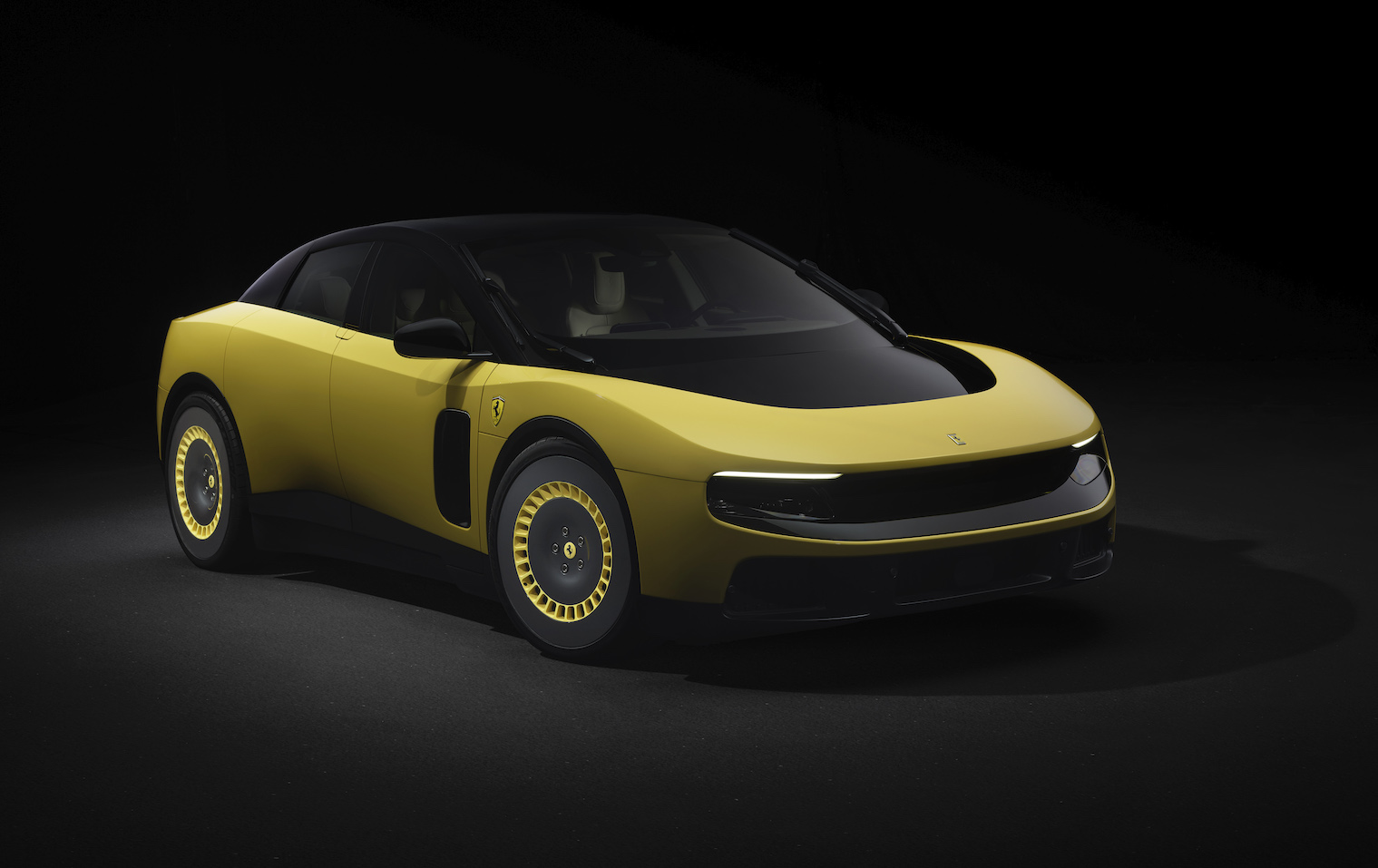
The task of designing the Luce was entrusted by Maranello to LoveFrom, a creative collective of exceptional minds from diverse disciplines, founded by former Apple design chief Sir Jony Ive and industrial designer Marc Newson. By handing over the task to an outside team, Ferrari ensured a new perspective and cross-breeding of ideas, making it possible to introduce a new design language.
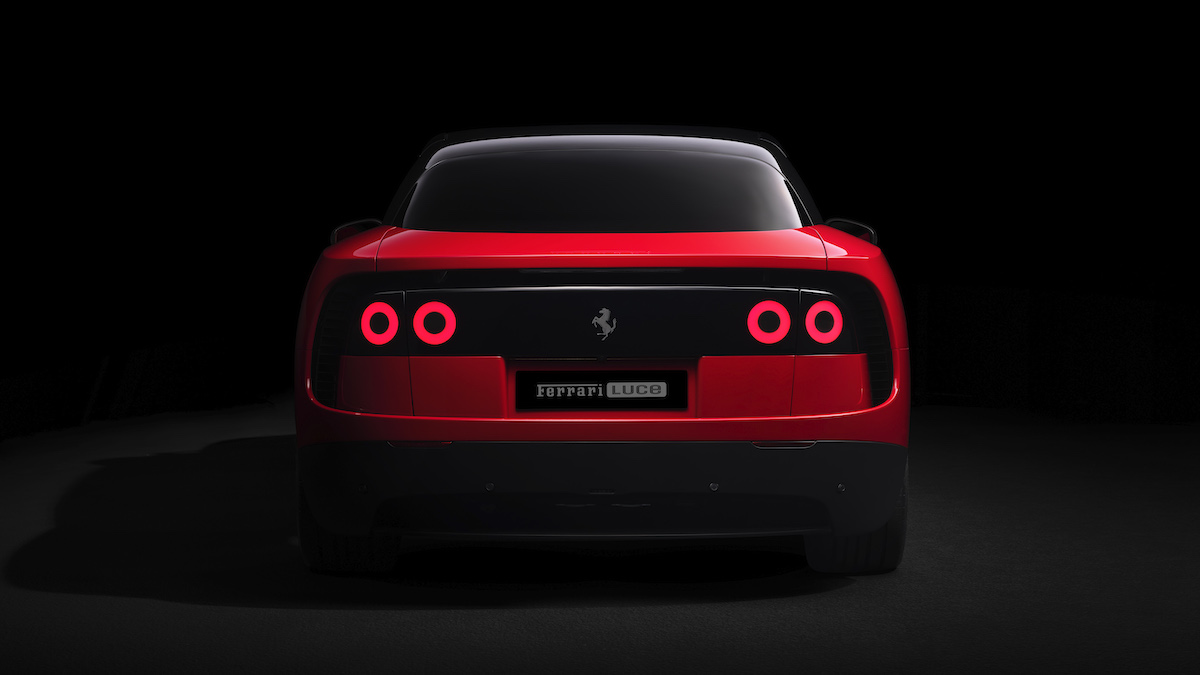
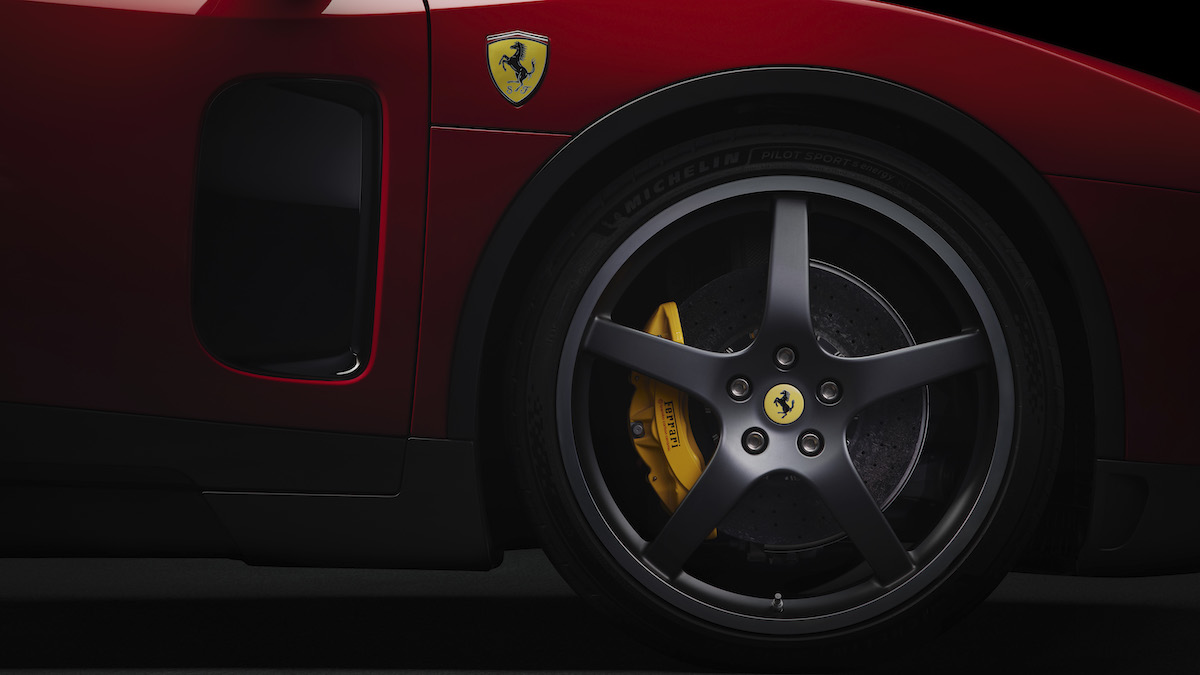
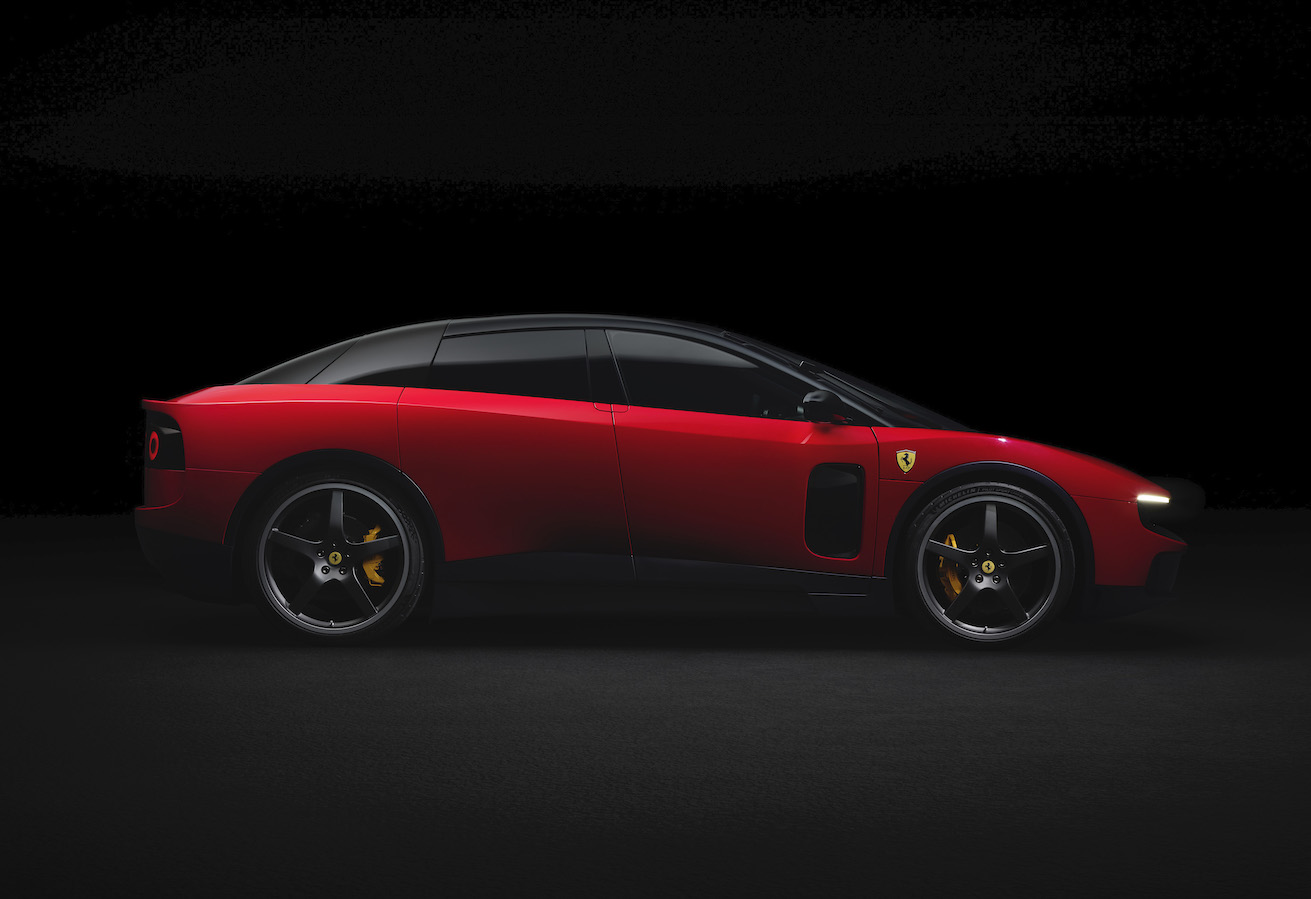
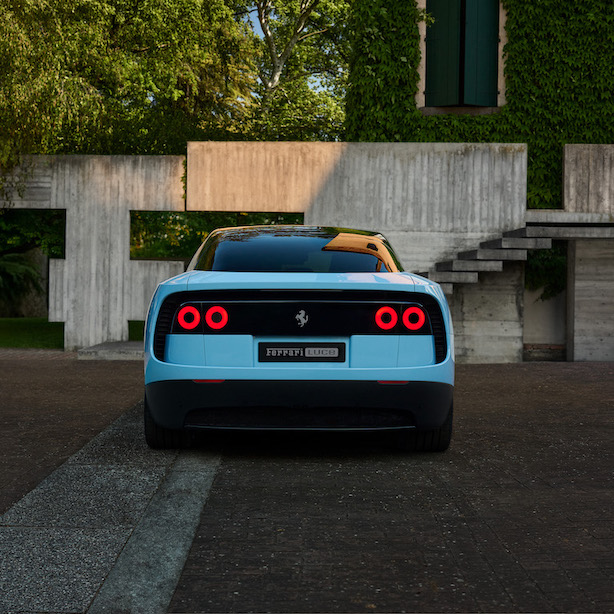
The lights seem to gently recede when switched off, preserving the purity of the form. The halo tail lights celebrate the beauty and clarity of the 360 Modena and 458 Italia. Luce has the largest staggered wheel diameters on a series-production Ferrari road car: 23” in the front and 24” at the rear.
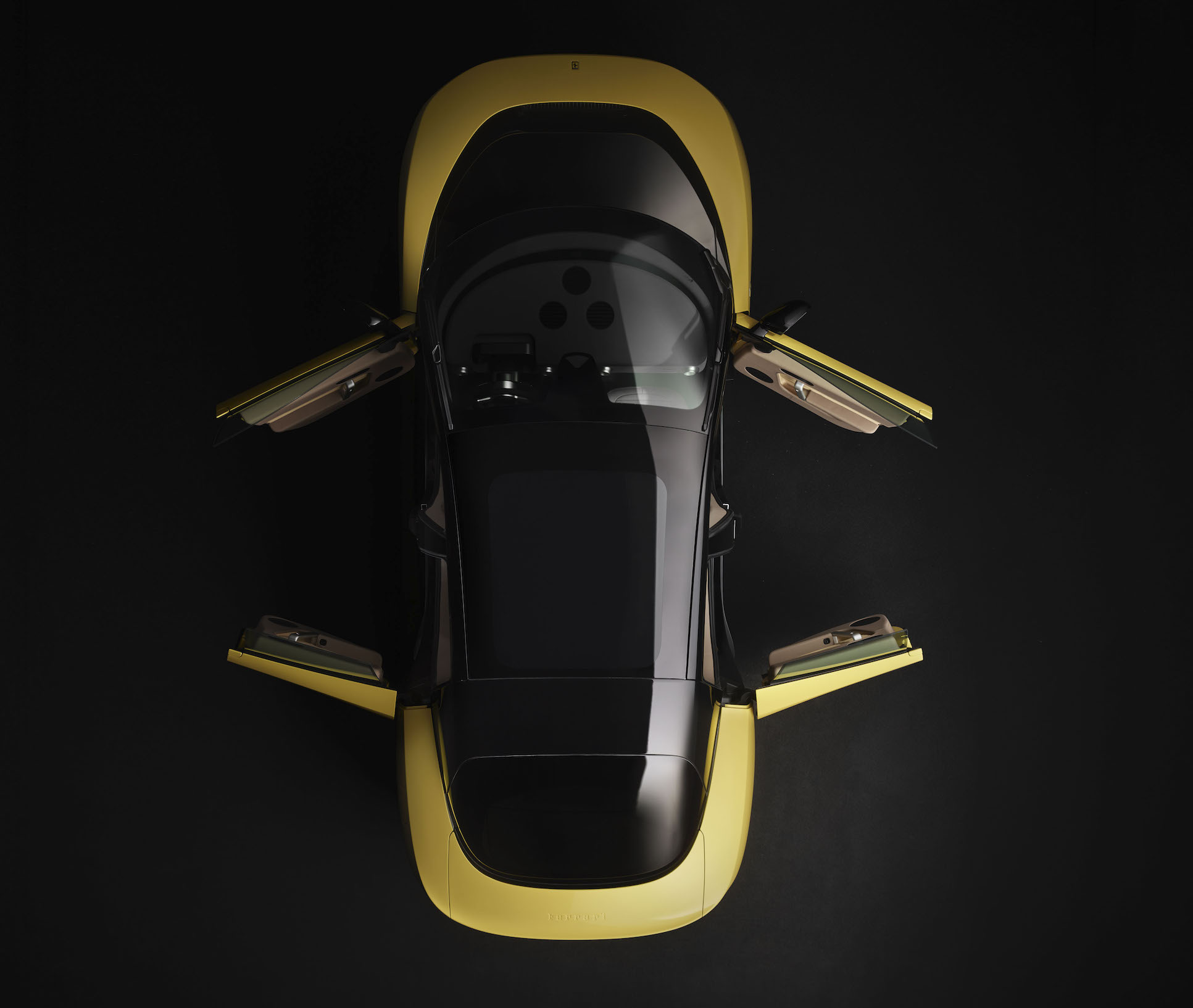
5027 mm in length, the Luce is 5 cm longer than the Purosangue and at 1544 mm, about 5 cm closer to the ground than Ferrari’s SUV model. In a characteristic feature, the doors open wide from the centre, hinged at the front and rear pillars.
The luxury of Luce
The advanced, electric drivetrain translates to a totally new architecture that adds the luxury of spaciousness, resulting in the first Ferrari with four doors and five seats. The set up with front-mid engine layout and a rear gearbox had no place for a fifth seat so far. The cabin design eliminates the central tunnel while integrating the battery beneath the floor and rear seats.
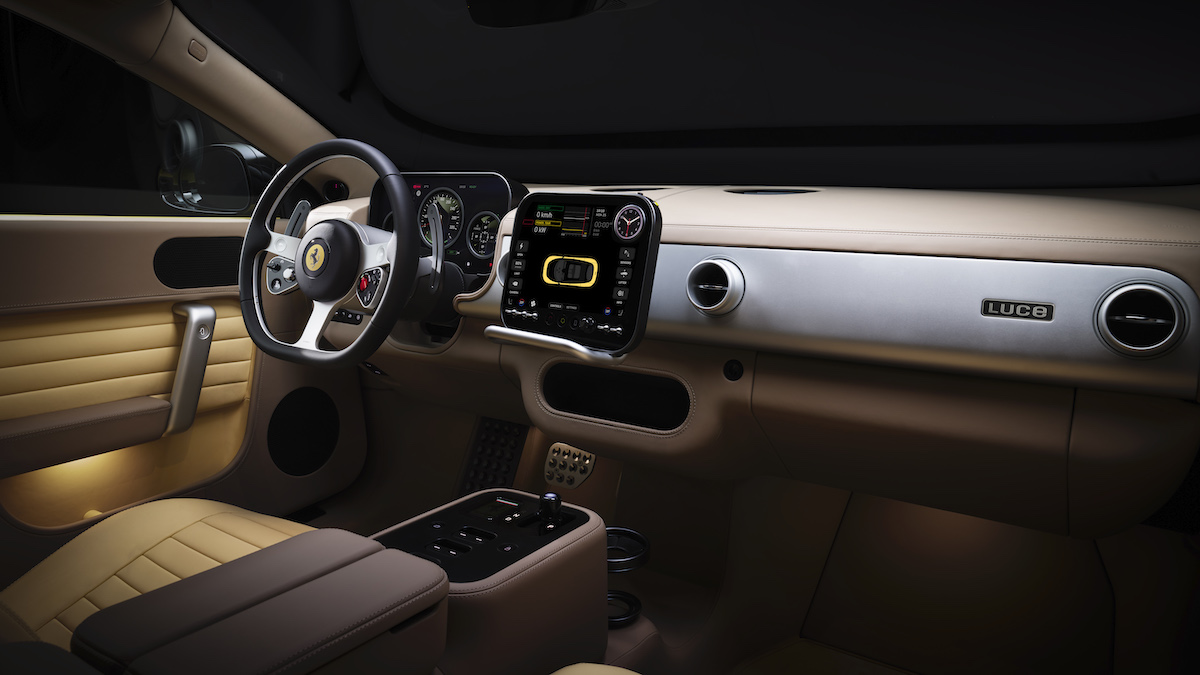
Materials shaping the Luce experience include recycled anodised aluminium, Corning® Gorilla® Glass and premium leather. The Ferrari Audio Signature involves a 21-speaker audio experience and 24 channel/3000 W amplification.
In the new origins of Ferrari, clarity and refined simplicity mark the design language that integrates the exterior, interior and interface. The shell-like form is defined by the glasshouse. Floating aerodynamic wings in front and rear is a prominent design feature as well as performance booster.
Keeping it in the house
Luce defines an intent to create a Ferrari 360°, not merely the “electric Ferrari”, designed for deeper engagement and performance with unmistakable individuality. As is tradition, Ferrari has chosen to engineer and make the main components in-house—from the electric engines to the battery pack, leading to more than 60 patents. This will enable Ferrari to provide support on all electric components, including batteries, in line with the Ferrari Forever philosophy.
Performance, handling, sound – everything Ferrari
The driving technologies in the new Ferrari gives a new face to the archetypal authenticity of Ferrari – advanced dynamic management and an authentic, functional sound that has always been a component of the experience. Along with new regeneration and torque management systems, the Luce is set to make the most of its new energy platform.
Ferrari, inside out
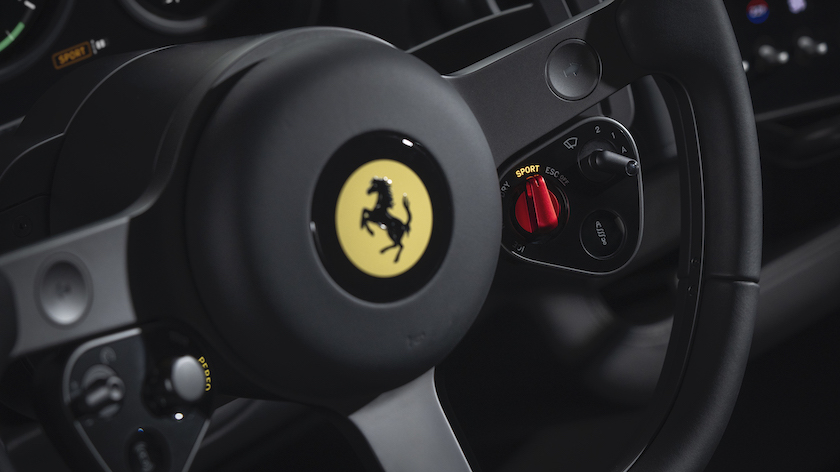
Inside, there is a welcome surge of technology and dynamic interface. However, the Luce doesn’t move away from the one-on-one experience built into a Ferrari cabin. Deeply engaging tactile controls bring together the best of physical and digital, in a balanced combination of beauty and function – uniting mechanical buttons, switches and dials with digital information relevant to the context.
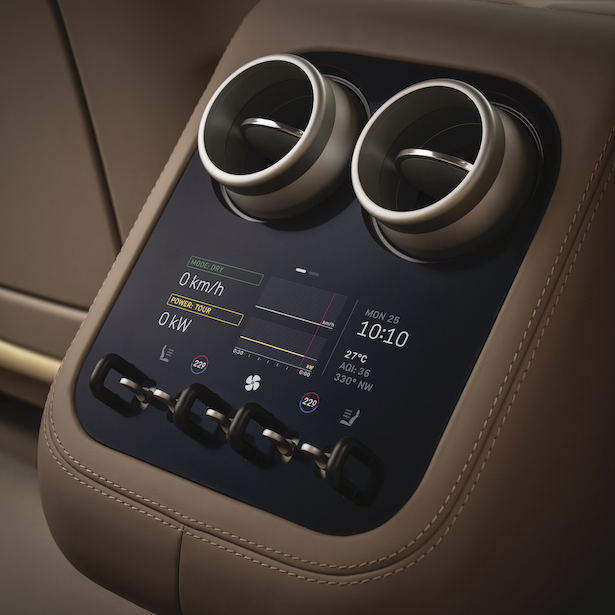
Ferrari Luce rear AC vent and controls
What electrification means to Ferrari
Four years ago, Maranello had announced, and later confirmed, its multi-energy strategy which considers electrification as just one of the available means to explore and expand its potential in product architecture, performance, design and driving experience. In other words, it doesn’t call for a replacement of existing engines but facilitates technology transfer across the range – for instance, between road cars and the 499p that won the World Endurance Championship.
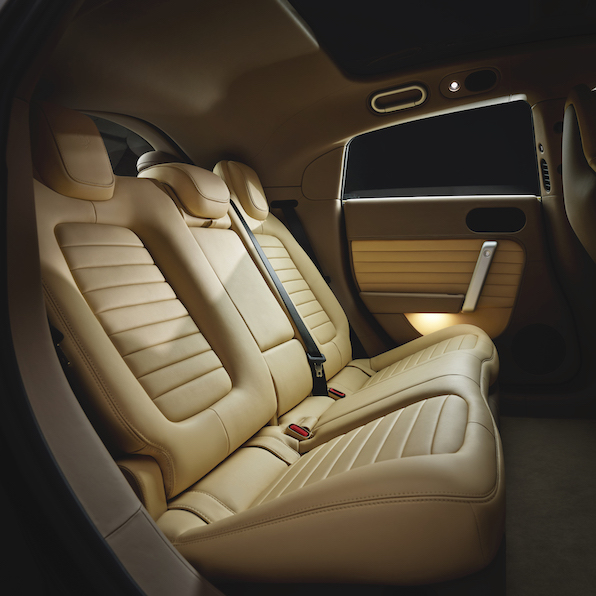
Ferrari Luce build and drive
Luce is built on a bespoke platform with a dedicated chassis and innovations in every single component. Ferrari’s experience in motor racing allowed kerb weight to be restricted to 2260 kg, facilitating best‑in‑class performance with a total power output of 1050 cv. The Luce is powered by a high‑capacity 122 kWh battery offering a range of more than 530 km.
0–100 kmph in 2.5 seconds, 0–200 kmph in 6.8 seconds, top speed of over 310 kmph
Ferrari Luce is engineered with an active suspension system derived from the F80 and an independently steering rear axle. As fans would see it, what enables Ferrari’s entry into the world of high‑performance electric sports cars are two aspects—the control of each wheel’s motion in every direction and the authentic approach to sound – that the sound must be generated from the car’s mechanics to complement the driving experience. A precision accelerometer at the centre of the axle captures the dynamic texture and vibration of the rotating components while the sound waves are moving.
Ferrari Luce independently drives each wheel with its own motor.
The Ferrari Luce has the lowest drag coefficient in the history of Maranello’s road cars (the release doesn’t specify a number). Active ride height can lower the front by 10 mm at speed.
The new electric architecture allows the vehicle dynamics to be designed with an unprecedented influence on centre of gravity, inertia, and freedom of control, enabling Ferrari Luce to always remain agile and spontaneous. The e-Manettino modulates power and traction, and the iconic five-position Manettino is equipped with logics that adapt to grip conditions. A new control centre debuting on the Ferrari Luce integrates powertrain and dynamics—dubbed Vehicle Control Unit (VCU), it updates targets 200 times per second and coordinates efficiency strategies with the brand-new Side Slip Control X.
Electric all-wheel drive is a first for a Ferrari
The all wheel drive allows torque vectoring to ensure precision and responsiveness, while the new torque shift engagement and extended regenerative braking deliver engine braking worthy of a sports car.
Four F80-derived permanent magnet synchronous engines with radial flux deliver a maximum speed of 30,000 rpm in the front and 25,500 rpm in the rear. The high-voltage battery pack was designed, validated, and built in Maranello. It has 210 cells in series that deliver 122 kWh and support fast charging up to 350 kW.
Generous in its use of recycled secondary-alloy aluminium, Luce leads to lower CO₂ emissions during the production of around 70% of the overall vehicle weight.
Love from Ferrari
The ranting public and falling stock count simply reflect a few things: the passionate but not-so-unconditional love for Ferrari; the resistance to change that one would normally expect of a conservative business house like Ferrari’s and yet surpassed this time by the admiring public; the contention that “it can look like a Ferrari and still be electric”; the open acknowledgement by brands like Ferrari and Maserati that electric is ‘just another drivetrain’.
Yes, the glasshouse might remind some of the LMP2. The top view might seem like a glossy mouse. The front wings could be gaping a bit wider than popular appeal. The round taillamps cased in the rear might throwback love to an F40. The gadgetry that people wowed at in ‘futuristic’ videos doing the rounds from brands like Mercedes-Benz may be seen as gimmicks within a Ferrari cabin. But perhaps that’s because Ferrari is loved differently and loved more. Therefore, when the dust settles, Ferrari Luce will have marked a new chapter and left a benchmark behind, to spawn electric models that remind one of the ‘classic Luce’ at some turn in the future—beyond that bend we can’t see just yet!