It has been long coming. The action series that would be titled ‘The cleansing’. While this marks the end of many Chinese legacy automotive brands, it also can be read as a quality commitment to the international markets swept over by the Chinese automotive manufacturers.
The Ministry of Industry and Information Technology (MIIT) of Chinese Government, in their decree number 408 of June 2026, have formally removed the vehicle production rights of eight companies from the registry—FAW Xiali, Brilliance Auto, Zotye, Leopaard, Lifan, Hawtai, BAIC Yinxiang (HYOSOW), and Haima. Their production lines have been sealed and production ceased, and they remain without any legal right to manufacture or assemble complete vehicles.
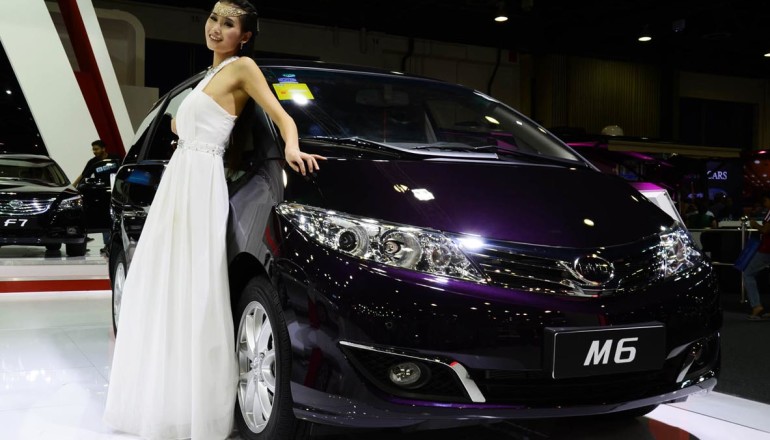
[The cover picture is from our Motor Show archives and for illustrative purpose only]
Legacy that withered
Ironically, many of these brands once were in the forefront of China’s early auto boom. FAW Xiali had the honour of being the best-selling sedan for 18 consecutive years and was dubbed “national family car”. Leopaard had military roots and built their reputation with rugged off-roaders, while Lifan was primarily known for motorcycles. Brilliance Auto, Hawtai, BAIC Yinxiang, and Haima also can be counted as pioneers who held sizeable market share.
Reasons of the fall
According to analysts, a fragile technological core is at the heart of this fiasco. Many of these brands relied on the popular model of “rebadging and assembly”, which saved them on R&D spending. For example, brands like Zotye, Haima, and Brilliance Auto assigned annual R&D budgets only in the tens of millions or at best over 100 million yuan, as against the investment by top-tier players which ran into billions. Over a period, this left their technological prowess waning and them unequipped to manage the demands of electrification and intelligent automotive advances. New demands like China VIb emissions standards or advanced autonomous driving remained beyond them. On the business decisions front, some of them diverted capital into non-core sectors like real estate and finance—a common mistake in the corporate downfalls.
What it means to the GCC market
Just a few years ago, the GCC markets had hardly 50 automotive brands from around the world – the US, the UK, all of Europe, Japan, Korea, India and of course China added up to just that. In the middle of 2026, the number has almost doubled – and the second fifty has been brought up almost single handedly by Chinese brands. A large number of these brands are authentically represented by reputed dealership as also newly spawned outlets. There is a threshold of numbers that means choices, crossing which would mean confusion and chaos instead.
Initially, it was a waiting game. Customers watched the new brands coming in, cautious in making purchases and that is when value that was obvious, offers that couldn’t be ignored and reassurance that seemed too good to be real convinced enough buyers to roll up a critical mass of trust – and then the buying spree broke loose. However, in the background, the question was always ringing out loud – ‘which brand can we trust’? The answer was obvious—only time will tell. Now such strict hygiene measures are also helping to form a clearer picture.
Ironically, the exit of these eight brands highlights the end of what Chinese media describes as the “Wild West” era. A period characterized by imitation, low prices, and joint-venture dividends. With more and more Chinese brands reaching foreign shores, the country seems to be bent on keeping the nation as a brand intact, with clear signals such as these—differentiating the past and its follies from the future that it is advancing towards and, to a large extent, is creating across the globe.
Disambiguation note: One of the brands whose license is revoked is Liebao that has been addressed in English as Leopard or Leopaard. This is a legacy brand that is a part of the GAC Group today and shouldn’t be confused with the brand Fang Cheng Bao, a relatively new, electric vehicle sub-brand under BYD Auto.